Field technician app
One Android app that replaced 5 disconnected tools for ~30,000 field technicians at a Fortune 100 US telecom provider.
Try the interactive prototype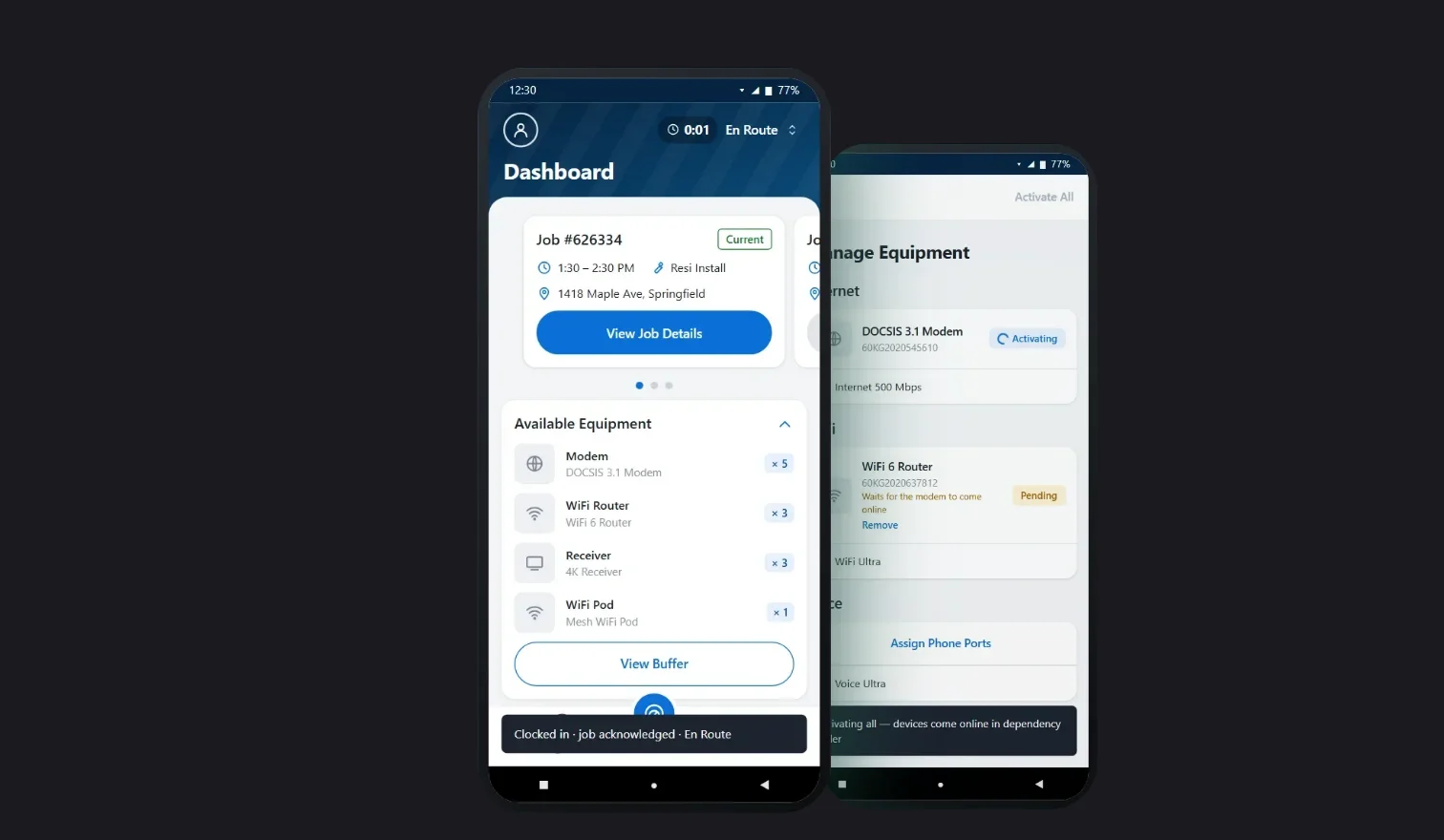
- Project role
- Senior Lead UX Designer (contract, then full-time)
- Team
- Timeline
- 18 months, 2023–2024
- Platform
- Android mobile app
- Status
- Shipped, national rollout
Why this one matters to me
This is the project I’m proudest of. I learned a lot on it, and I spent just as much time teaching and building relationships. We ran it (mostly) by the book, and it paid off in a lot of ways. The process we followed there is my gold standard now.
- 80 → 50 minper job (37% less)
- +2jobs per tech per day
- 390hours reclaimed per tech per year (drive + inventory only)
- ~30,000technicians
My part in this
- Decision I influenced
- Extending the in-scope scanner to how technicians receive and return equipment. It was originally out of scope, and it became an easy win for the whole company.
- What I pushed back on
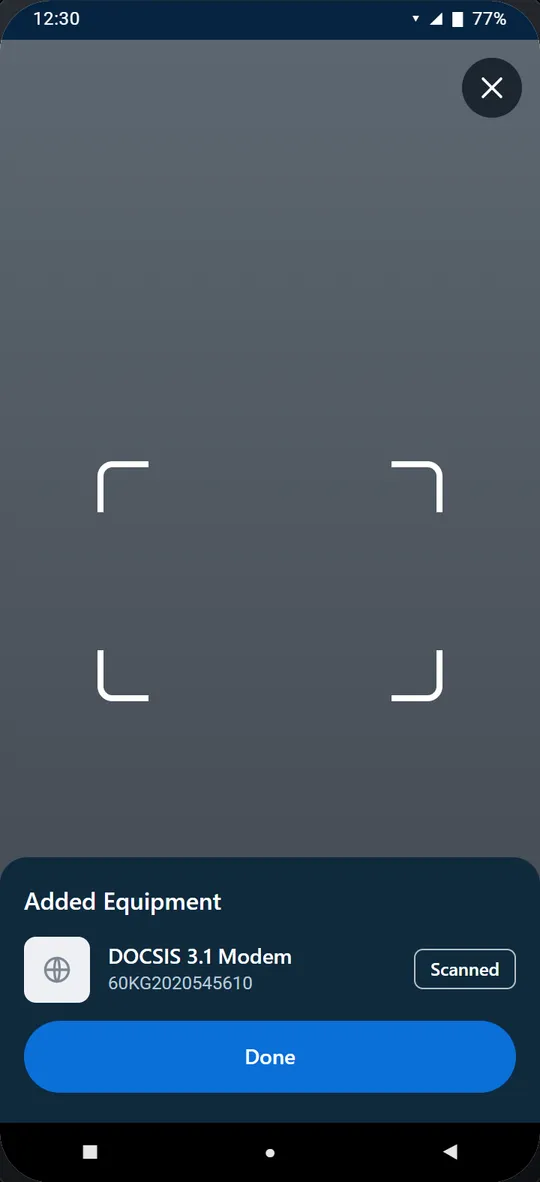
- The manual 14-day inventory cycle and the processes behind it. Questioning them led to scan-verified, live truck stock and less time receiving and returning equipment.
- Trade-off I made
- Ops wanted required safety steps in a product built to save time. I accepted the extra taps, which won over ops and improved the business’s safety KPIs.
- What I noticed
- Techs were losing easily recovered time in two places: inventory management and re-routing. Solving both gave technicians back time between jobs.
- What changed because I was there
- Average job time fell from 80 to 50 minutes in testing, and bringing developers and ops into design early kept my team’s designs feasible and efficient to build.
The problem
Field techs juggled 5 disconnected tools: status updates by radio and phone, a laptop dispatch portal, paper forms, a laminated safety card, and a separate app (or a support call) to activate each device. Jobs routinely ran over their allocated time, and dispatch rarely had an accurate, current picture of where anyone was.
What I did
Key insight Most of the lost time wasn’t in the install itself. It was the overhead around it: reporting status, switching apps, and reconciling equipment by hand. So the goal became removing steps, not speeding them up.
- 01
Actions update status automatically
I tied status to the actions techs already take. Acknowledging a job sets En Route, Start Job sets On a Job, and closing the job sets Available, so dispatch sees a timestamped state without anyone reporting it.
Trade-off: Automatic status is wrong whenever the day doesn’t follow the script, like a stop for parts. So status stays one tap away in every screen header, and manual changes still work.
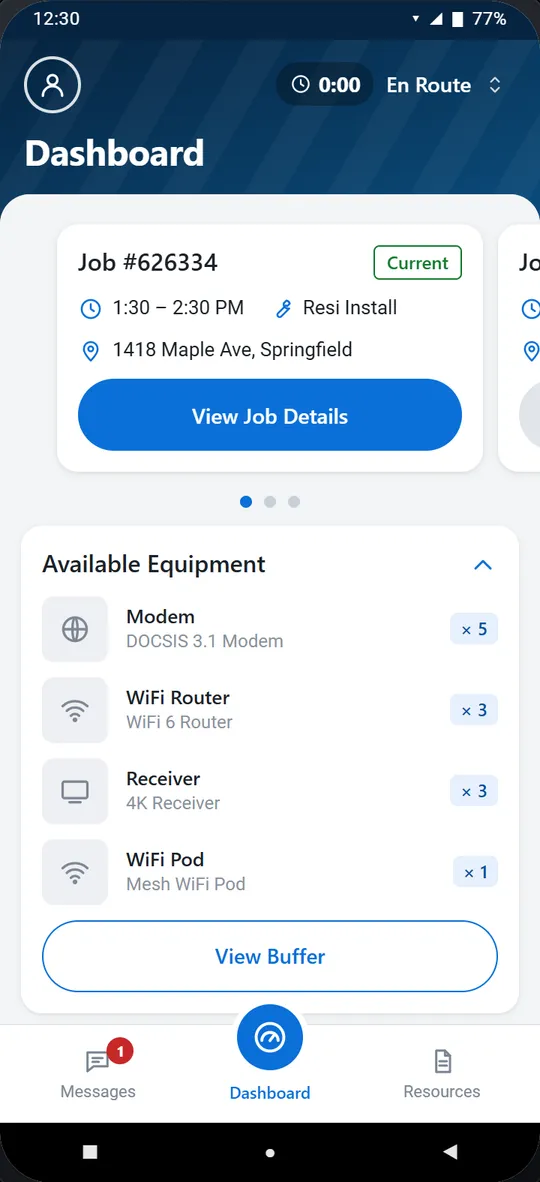
Acknowledging the job set En Route and started the timer. Nobody called dispatch. 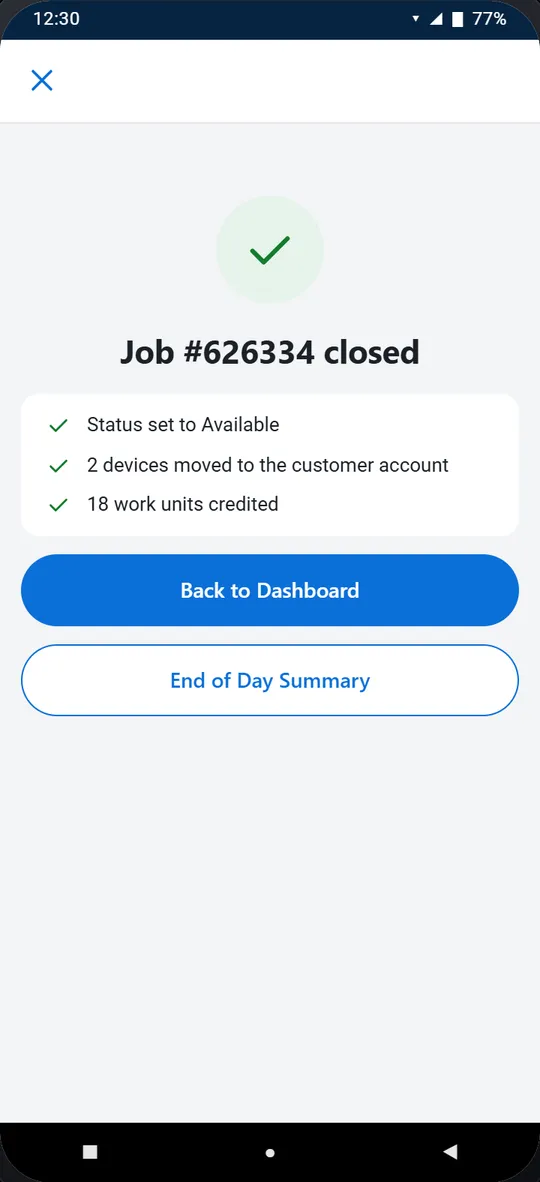
Closing the job sets Available on its own. - 02
Safety right before the work
Instead of a checklist at clock-in, I placed the required safety acknowledgment between arriving and starting the job, and logged it for compliance.
Trade-off: It adds a required step to every job, in a product meant to save time. We kept it short and accepted the extra taps, because a logged check can be audited and a laminated card can’t.
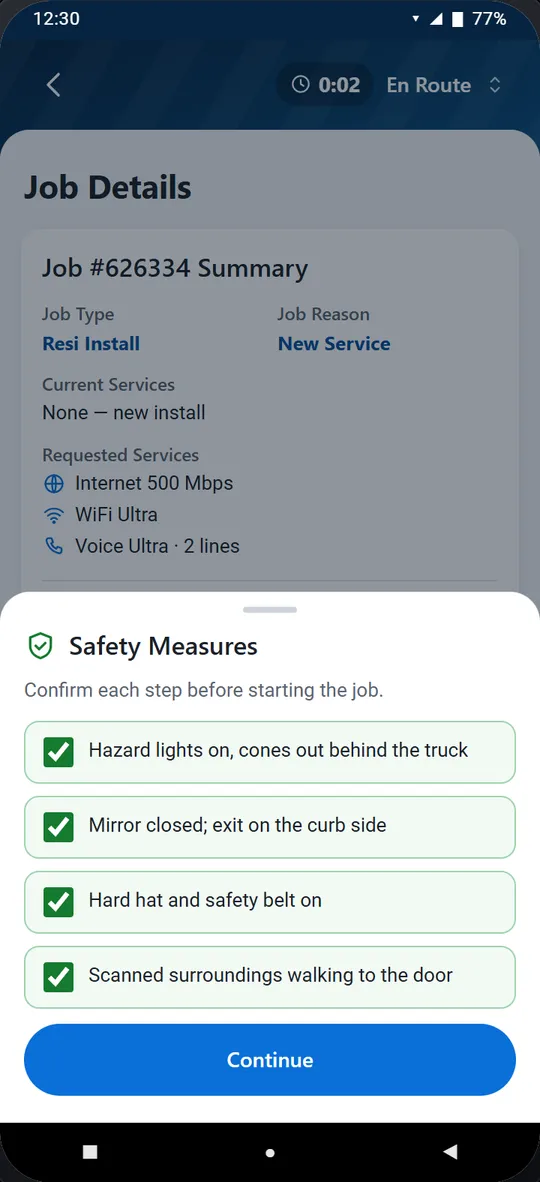
The safety check sits between arriving and starting the job, and each step is logged. - 03
Activate All, in dependency order
One button brings every device online in the right order. Devices that depend on others, like a router waiting for the modem, show Pending and continue on their own. This replaced a separate app or a 15-minute support call per device.
Trade-off: Batching hides what’s happening to each device. Each one keeps its own status and can still be activated on its own when something fails.
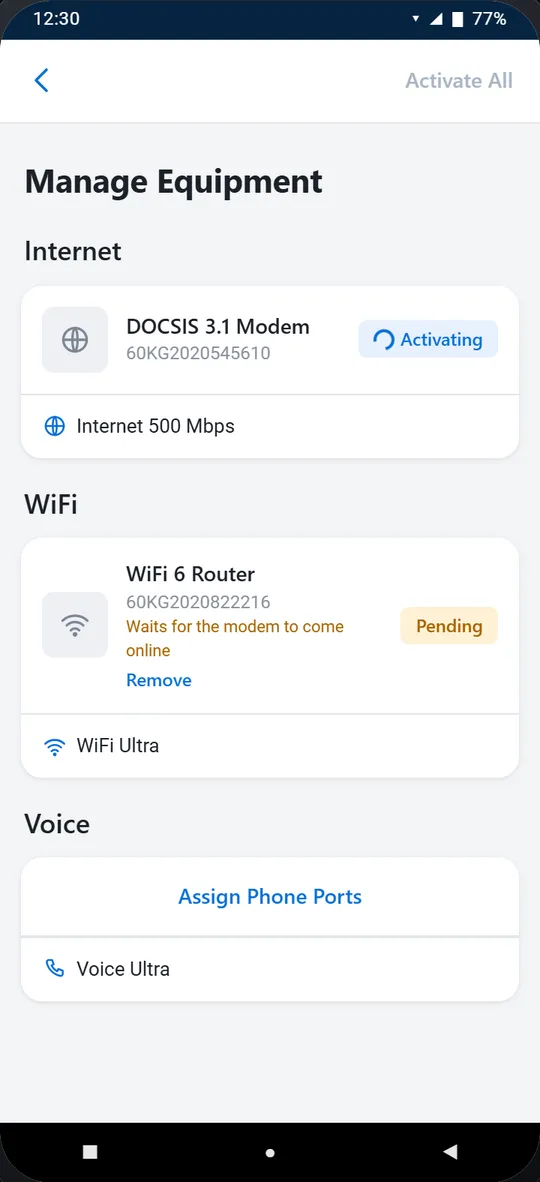
Activate All: the router waits as Pending until the modem is online. 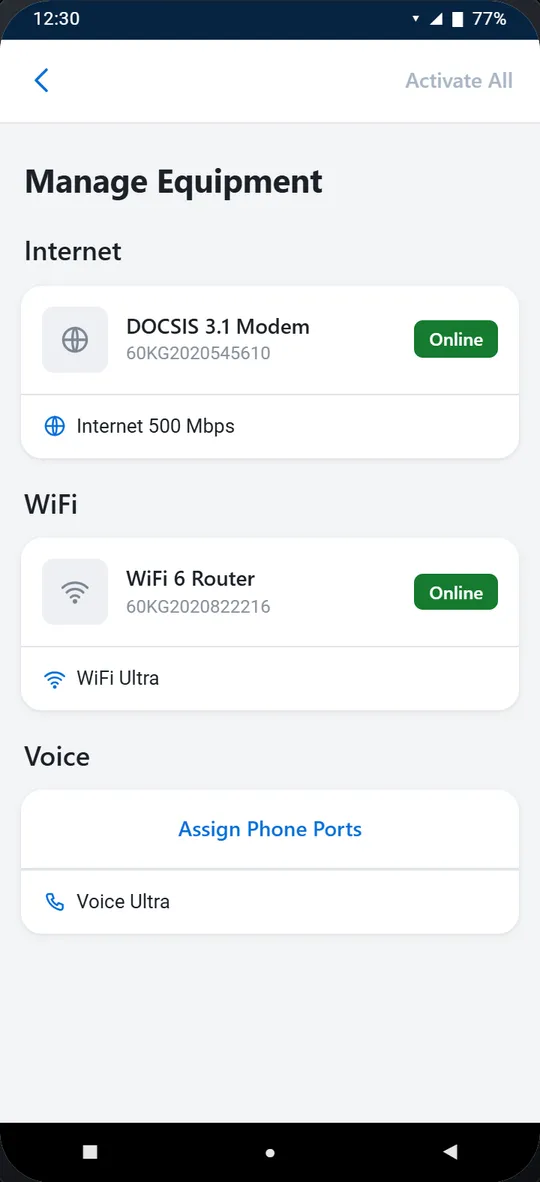
Both devices online, with no support call.
Results
- Job time cut from 80 min to 50 min.
- +2 jobs per technician per day.
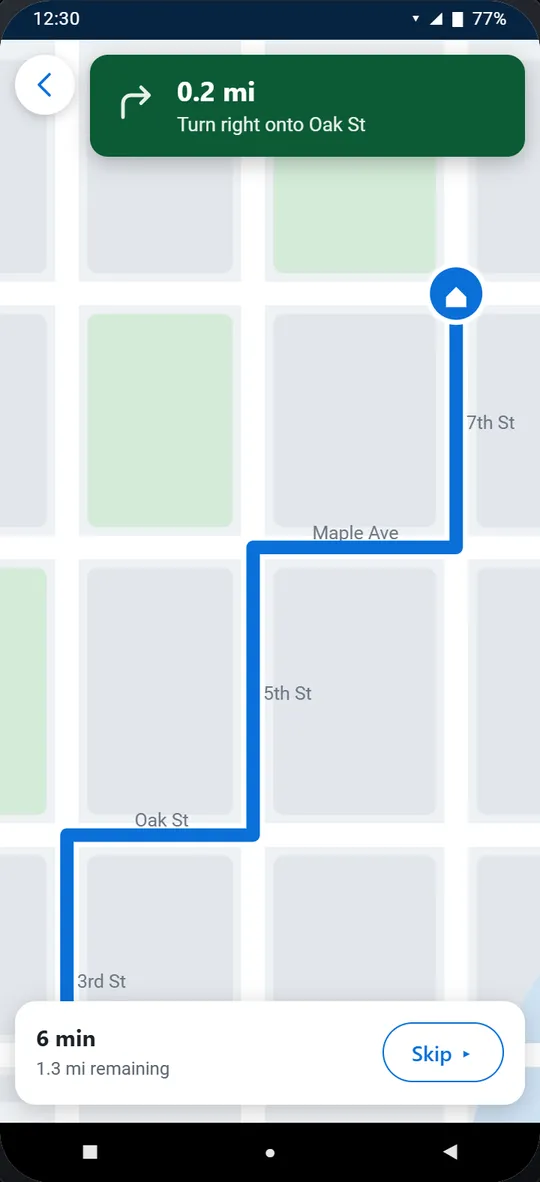
- 1 hour per day less drive time: accurate job status means techs are no longer pulled off a job they’ve already driven to, and managers direct equipment requests instead of techs waiting on each other.
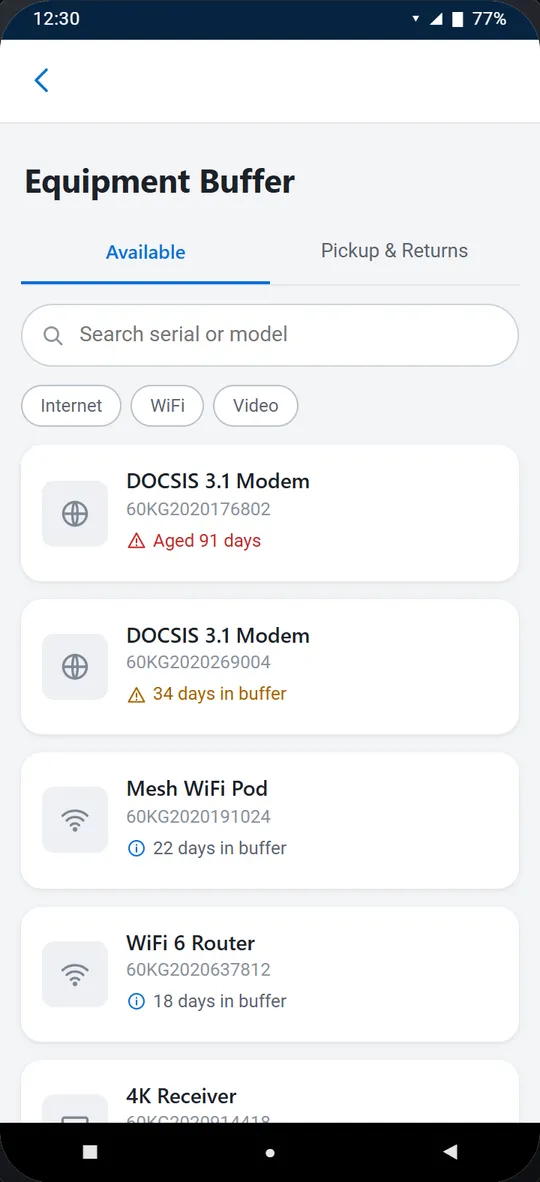
- 5 hours every two weeks less inventory work, because we replaced the manual 14-day equipment inventory cycle with scan-verified, live truck stock.
- Equipment losses reduced through scan verification and oldest-first stock. Scanning was extended to how techs receive and return equipment, which was originally out of scope.
- Safety steps are now logged for compliance, and the required check improved the business’s safety KPIs.
These figures come from usability testing and interviews before launch. The client didn’t track them after the national rollout.
Behind the results
What I’d do differently
The research team ran 3–6 months ahead of delivery, which kept design grounded in real work. With more time, I’d have sent them to the buffer days, where techs pick up and return equipment. We learned that part of the system from ops, not from the techs living it.
I’d also ask, from day one, to own analytics after release, so the job-time savings could be measured in the field and not only in testing. And I’d get bigger ideas on the roadmap early: I pitched AI concepts like augmented reality for finding the most efficient line-burying paths, which were out of budget and scope this time.